

If you live in Minnesota, you know two things are certain: winter is always longer than we want, and road construction season is never quite long enough to fix all the potholes. But whether you’re commuting from Blaine to Bloomington or heading up North to the cabin, keeping your car legal is getting a little more expensive this year. As we roll into 2026, several legislative changes from the past few years are fully hitting our wallets. From the way we pay for electric vehicles to the "tabs" sticker shock many are seeing in their mailbox, the state is aggressively trying to fund the roads and bridges we drive on with Minnesota car tax.
At CarSoup, we want to help you budget for the year ahead. Here is the straightforward guide to the 2026 Minnesota car tax and fee changes that every driver should know.
Table of Contents
- 1. The Big Change: New Electric Vehicle (EV) Surcharge (Effective Jan 1, 2026)
- 2. Registration "Tab" Fees: The Sticker Shock Continues
- 3. The Gas Tax: Indexed to Inflation
- 4. The "Retail Delivery Fee" is Here to Stay
- 5. Motor Vehicle Sales Tax (MVST)
- 6. Filing Fees: The "Mail-In" Surcharge
- Tips to Reduce Your Minnesota Car Tax Burden
- Summary
- FAQs
1. The Big Change: New Electric Vehicle (EV) Surcharge (Effective Jan 1, 2026)
If you drive an electric vehicle, this is the most critical update for you. For years, MN EV drivers paid a flat $75 annual surcharge to make up for not paying gas taxes. As of January 1, 2026, that system has been completely overhauled.
The new law moves from a flat fee to a value-based surcharge.
How it works: Instead of $75, you will now pay a percentage of your vehicle’s MSRP (Manufacturer's Suggested Retail Price).
The Rate: The surcharge is calculated as 0.5% of the vehicle's base value for all-electric vehicles (EVs) and 0.25% for plug-in hybrids (PHEVs).
The Minimum: There is a new "floor" for this fee. You will pay at least$150 (doubling the old rate).
Why it matters: If you own a newer, high-value EV (like a Tesla Model Y or Rivian), your fees are jumping significantly. For a $50,000 EV, the surcharge alone could be $250, on top of your standard registration tabs. This change was designed to ensure heavier electric vehicles contribute more to the Highway User Tax Distribution Fund.
2. Registration "Tab" Fees: The Sticker Shock Continues
You might have noticed your registration renewal bill (the "tabs") didn't drop as much as you expected this year. That is due to the revised depreciation schedule passed in the 2023 transportation bill, which is now fully impacting 2026 renewals.
In Minnesota, your tab fee is based on your car's value and its age.
The Old Way: Cars depreciated quickly in the state's eyes, meaning your tabs got cheaper fast.
The New Way (2026): The state now assumes your car holds its value longer. For example, a 3-year-old car is now taxed at 90% of its original MSRP (up from the previous lower percentage).
The Formula: 1.285% of the base value + a $20 flat fee (plus filing fees).
What this means: If you bought a car in 2023 or 2024, don't expect a big price break on your 2026 tabs. The state is collecting more revenue from newer vehicles to fund infrastructure projects.
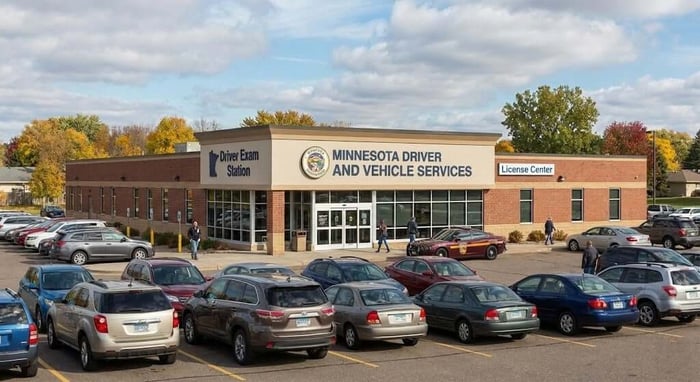
Want to get an estimate of what you'll owe for your registration tax this year? Check out the official MN DVS tax calculator where you can calculate the tax using either the VIN (Vehicle Identification Number) or by manually entering the Vehicle Details (Year, Make, Model, and Price).
3. The Gas Tax: Indexed to Inflation
Gone are the days when the gas tax stayed the same for a decade. Minnesota’s state gas tax is now indexed to inflation (specifically, the Minnesota Highway Construction Cost Index).
While the law caps the annual increase (typically around 3%), this means the rate you pay at the pump will likely tick up every year to keep pace with the cost of asphalt and labor. For 2026, you can expect the state gas tax to be slightly higher than 2025, hovering around 30-32 cents per gallon (plus the federal tax).
Note: This money goes directly into a dedicated fund for road and bridge maintenance—essential for those rough Spring pothole seasons.
4. The "Retail Delivery Fee" is Here to Stay
Implemented in mid-2024, the Retail Delivery Fee is fully active in 2026. While not a "car tax" in the traditional sense, it affects car owners who buy parts online.
The Fee:50 cents per transaction.
When it applies: On retail deliveries over $100 involving items subject to sales tax (clothing, electronics, and yes, car parts).
Exemptions: Food, baby products, and drugs are exempt.
If you order a new set of floor mats or a car battery online for home delivery, you’ll see this 50-cent line item. It’s a small fee, but it’s estimated to raise millions for—you guessed it—road maintenance.
5. Motor Vehicle Sales Tax (MVST)
If you are planning to buy a car in 2026, the Motor Vehicle Sales Tax remains steady.
Current Rate:6.875%
Where it applies: New and used vehicle purchases.
Trade-in Credit: Remember, Minnesota allows you to deduct the value of your trade-in from the purchase price before taxes are calculated. This is a huge money-saver!
Example: If you buy a $40,000 truck and trade in a car for $15,000, you only pay the 6.875% tax on the $25,000 difference.
6. Filing Fees: The "Mail-In" Surcharge
Did you know it costs more to renew your tabs by mail now? Effective late 2025 and continuing into 2026, there is a $5 surcharge for vehicle registration renewals submitted via mail.
Pro Tip: To avoid the extra fees and get your tabs faster, renew online at the DVS website or visit a DVS kiosk (often found in grocery stores like Cub Foods).
Tips to Reduce Your Minnesota Car Tax Burden
While you can’t avoid all fees, you can reduce some costs. Here are some ways to cut the fees:
Maximize your trade-in value
Consider used vehicles with lower tab fees
Research EV incentives alongside EV fees
Time your purchase around registration cycles
A little planning can go a long way towards keeping your costs in check.
Summary
Owning a car in the Land of 10,000 Lakes is getting a bit pricier, but these funds are directly tied to keeping our infrastructure drivable.
Whether it's the new EV surcharge or the indexed gas tax, being aware of these 2026 changes can help you avoid surprises at the DMV.
FAQs
Did the Minnesota gas tax go up in 2026?
Yes. Minnesota's gas tax is now tied to inflation (construction costs). While the exact adjustment happens annually, drivers can expect a small increase (capped at 3%) starting January 1, 2026, to help pay for road repairs.
How much will my tabs cost for a 2026 renewal?
It depends on your car. The formula uses 1.285% of your car's Manufacturer's Suggested Retail Price (MSRP), adjusted for age. Because the state slowed down the depreciation schedule, tabs for vehicles aged 1-10 years are generally higher than they were under pre-2024 rules.
What is the new EV tax in Minnesota for 2026?
Starting January 1, 2026, the flat $75 fee is gone. It is replaced by an MSRP-based surcharge (0.5% for EVs, 0.25% for Plug-in Hybrids). The minimum fee is now $150.
Does Minnesota charge a delivery fee for car parts?
Yes. If you order more than $100 worth of taxable goods (including car parts) for delivery, a $0.50 Retail Delivery Fee is added to your total.
Are classic cars exempt from these increases?
Mostly. Vehicles registered as "Collector," "Street Rod," or "Pioneer" usually pay a one-time registration fee or a much lower annual rate ($10 tab options for very old vehicles), exempting them from the standard value-based tab fees.