Every few years, a crop of new vehicles lands that actually makes you stop and pay attention. Not just incremental updates or minor refreshes — but genuinely new ideas, revived nameplates, and price points that shift what's possible. 2027 is shaping up to be one of those years.
The auto industry has spent the last decade chasing complexity and premium pricing. New vehicles have gotten bigger, heavier, and significantly more expensive — leaving a lot of buyers priced out of the new car market entirely. But 2027 pushes back on that in a real way. We're seeing affordable electric options finally arrive at realistic price points, beloved nameplates making long-awaited returns, and technology that used to cost $60,000 trickling down to family budgets. It's the kind of shift that doesn't happen every year.
Whether you're shopping for a family SUV, a capable work truck, or something that just puts a smile on your face, there's something on this list worth watching. Here are five new vehicles arriving in 2027 that have us genuinely excited at CarSoup.
Table of Contents
1. Toyota Highlander EV — The Family SUV Goes Fully Electric
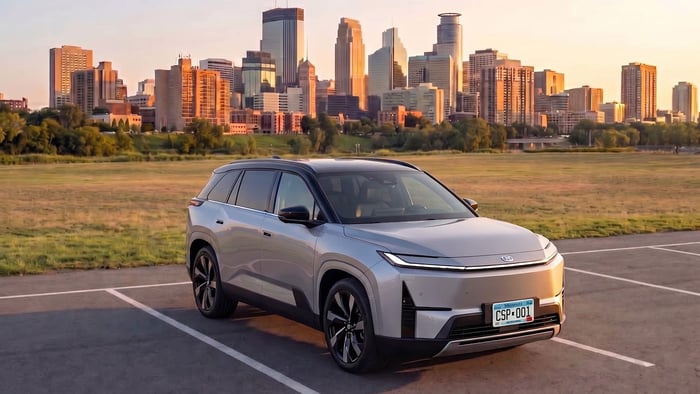
The Toyota Highlander has been a staple in Minnesota driveways for years — reliable, roomy, and built for families who actually use all three rows. For 2027, Toyota is taking it fully electric, and the result is more impressive than most people expected.
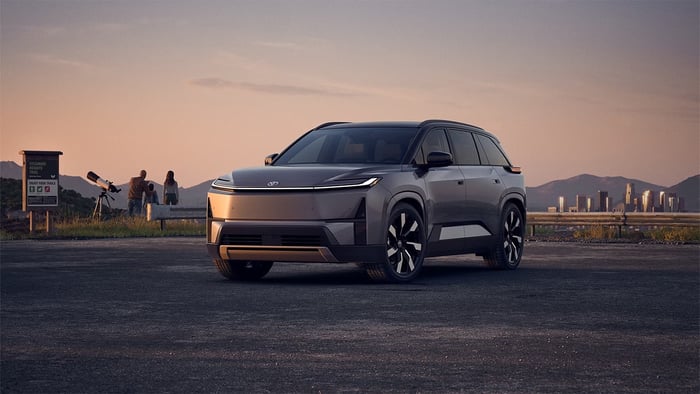
The Highlander EV starts with a 77.0-kWh battery and front-wheel drive, producing 221 horsepower and up to 287 miles of estimated range. Step up to the AWD version and you get a dual-motor setup with 338 horsepower. Toyota also offers a larger 95.8-kWh battery on select AWD trims for buyers who want maximum range. That's a great option to have — especially if you're doing regular highway miles or the occasional longer road trip.
One detail worth noting: Toyota engineered the battery pack to sit under the floor rather than eating into cabin space. The interior is actually roomier than the outgoing gas model — including the third row, which now has enough space for average-sized adults to sit comfortably without folding themselves in half. That's been one of the Highlander's longstanding complaints, and Toyota addressed it directly.
The Highlander EV also supports Vehicle-to-Load (V2L) technology, meaning it can power external devices — handy for camping trips, job sites, or an unexpected power outage. It's the kind of practical feature that makes an electric SUV genuinely useful beyond just getting from A to B.
Charging is handled through a standard port compatible with most public fast chargers. Toyota estimates a 10-to-80-percent charge in under 30 minutes on a DC fast charger, which is solid for a three-row family SUV. Pricing hasn't been officially confirmed, but industry estimates put the starting price between $45,000 and $55,000 depending on trim and configuration.
| Spec | FWD | AWD |
|---|---|---|
| Battery | 77.0 kWh | 77.0 or 95.8 kWh |
| Horsepower | 221 hp | 338 hp |
| Est. Range | Up to 287 mi | Up to 270 mi |
| Fast Charge (10–80%) | Under 30 minutes | |
Who it's for: Families who've been waiting for an electric SUV that doesn't compromise on space, practicality, or real-world range. If you've been on the fence about going electric because you weren't sure an EV could handle three kids, a dog, and a hockey bag — the Highlander EV is the answer Toyota has been building toward.
2. Ford Fathom — An Electric Pickup for Under $30,000
Ford has been trying to crack the affordable EV code for years. With the Fathom, they may have finally done it. Starting at $28,350 before destination — essentially the same price as a gas-powered Maverick — the Fathom is the first vehicle built on Ford's new Universal EV platform, designed from the ground up to make electric trucks accessible to a lot more buyers.
Ford projects the Fathom will offer more passenger volume than a Toyota RAV4, which is a useful benchmark for a compact truck. Every trim comes standard with bidirectional power capability, BlueCruise hands-free highway driving, Apple CarPlay, Android Auto, and a digital key. Those are features you'd pay significantly more to get on competing trucks.
Full range and towing specs arrive alongside the official reveal in early 2027, when pre-orders also open. Production is set for Ford's Louisville Assembly Plant in Kentucky, with deliveries planned for later in 2027. The base model uses a standard-range battery, with an extended-range option expected at a higher price point.
The context here matters: Ford's existing electric truck, the F-150 Lightning, starts at nearly $50,000. The Fathom isn't just a cheaper version of that — it's a fundamentally different vehicle built on a cost-focused platform specifically designed to hit a price point that most buyers can actually reach without a significant stretch.
Who it's for: Buyers who've wanted an electric truck but kept hitting a wall on price. The Fathom isn't asking you to spend $50,000 to go electric. It's asking you to spend roughly what you'd spend on a gas truck anyway — and get bidirectional power, hands-free driving tech, and a roomier interior than a RAV4 in the deal. That's a compelling offer.
3. RAM Dakota — A Real Midsize Truck Is Back
The RAM Dakota name disappeared from showrooms in 2011. After more than a decade of watching Toyota, Ford, and GM fight it out in the midsize truck segment, RAM is coming back — and they're not playing it safe.
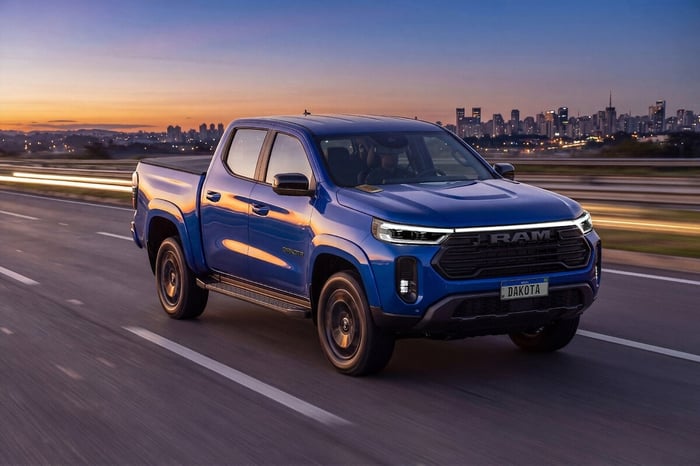
RAM CEO Tim Kuniskis has been direct: this will be a proper body-on-frame truck, not a unibody crossover wearing a bed. That distinction matters to serious truck buyers. Body-on-frame construction means a separate chassis and body — the same architecture used in full-size trucks — which typically translates to better towing capability, greater durability, and easier repair after hard use.
The Dakota is expected to target the low-to-mid $30,000s for base trims, competing head-on with the Tacoma, Ranger, and Colorado. Multiple powertrains are confirmed — turbocharged four- and six-cylinder engines, plus a plug-in hybrid option. That kind of powertrain flexibility at this price point is something the competition doesn't always offer. A PHEV option in a midsize truck is genuinely rare, and it could be a strong differentiator for buyers who want better fuel economy without going fully electric.
Production is targeted for 2027, with full powertrain and pricing details expected closer to the official reveal. The Dakota is also expected to be assembled in the United States, which matters to a lot of truck buyers.
Who it's for: Truck buyers who want real capability without full-size dimensions or full-size pricing. The midsize truck segment has exploded in the last decade — the Tacoma alone sells over 200,000 units a year — and RAM has been entirely absent from it. The Dakota's return gives buyers another serious option in a segment that's long overdue for more competition. If you've been cross-shopping Tacomas and Rangers, add this one to the list before you commit.
4. Toyota Celica — A Legend Returns
If you grew up with a Celica GT-Four poster on your bedroom wall, this one's for you. After nearly 20 years off the market, Toyota is officially bringing the Celica back — and it sounds like it's going to be worth the wait.
Toyota CTO Hiroki Nakajima has confirmed it plainly: "We will make the Celica." Reports indicate the new model will be called the Celica Sport, paired with AWD and Toyota's new turbocharged 2.0-liter G20E engine. Power estimates range from 400 to 450 horsepower, with hybridization actively being considered. A camouflaged prototype was spotted testing on World Rally Championship stages in Portugal earlier this year, lining up with Toyota's WRC timeline — their Yaris rally car loses WRC eligibility in 2027.
The WRC connection is more than a footnote. Toyota's Gazoo Racing division has a direct pipeline between its motorsport program and its production performance cars — the GR Corolla and GR Yaris are both direct descendants of WRC technology. The new Celica is expected to follow the same path, which means real engineering DNA behind the badge, not just a sporty body kit on a standard platform.
Unlike the Supra, which uses a BMW-sourced powertrain, the new Celica is expected to be a fully in-house Toyota Gazoo Racing product with AWD standard. Pricing hasn't been confirmed, but with 400-plus horsepower and a full GR development program behind it, this is going to be a serious performance machine with a legendary name — not an entry-level sports car.
Who it's for: Sports car enthusiasts who've been waiting for Toyota to build something truly homegrown and exciting again. The GR86 scratches one itch. The Supra scratches another. The Celica Sport could be something genuinely special — a proper AWD performance coupe built entirely by Toyota, for drivers who remember what made the original great.
5. Slate Truck — Everything You Need, Nothing You Don't
Most new vehicles are getting bigger, more complex, and more expensive. The Slate Truck goes the other direction entirely — and that's the whole point.
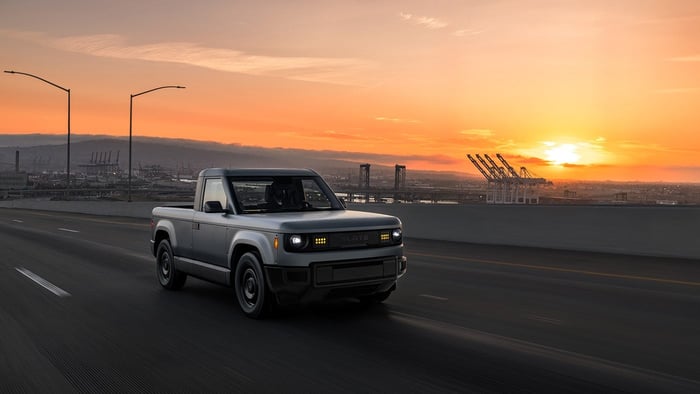
Starting at $24,950, the Slate is the most affordable electric pickup coming to market in 2027. It's a no-frills, single-cab two-seater powered by a 181-horsepower rear motor and a 64-kWh battery with an estimated 205 miles of range. Payload is rated at 1,550 pounds — which actually edges out the gas-powered Ford Maverick — and towing comes in at 2,000 pounds. For a lot of buyers, that's plenty of truck.
Inside, you get manual HVAC controls, crank windows, cloth seats, and no built-in infotainment screen. There's a phone mount and a spot on the dash sized for a Bluetooth speaker. It's unapologetically simple. But here's what makes it genuinely interesting: Slate sells it as a blank canvas. Over 200 accessories are available through their marketplace, with more than 80% priced under $500 — including roof racks, custom wraps, and seat covers. Full vehicle wraps are available for under $500, with over 100 color options at launch. Want to convert it into an SUV? There's a body kit for that. The truck ships in a molded gray composite body and you build it into what you need.
On the charging side, the Slate supports DC fast charging at up to 120 kW, with a 20-to-80-percent charge in about 30 minutes. It uses a NACS port, giving owners access to Tesla's Supercharger network — a meaningful advantage for an affordable EV. A full Level 2 charge takes about four hours.
Slate plans to sell directly to buyers and handle service through local hubs, skipping the traditional dealership model entirely. That approach keeps overhead low and is part of how they're hitting the $24,950 price point.
| Slate Truck | Spec |
|---|---|
| Starting price | $24,950 |
| Est. range | ~205 miles |
| Payload | 1,550 lbs |
| Max towing | 2,000 lbs |
| Fast charge (20–80%) | ~30 min |
Who it's for: Buyers who need a capable, affordable work truck and are tired of paying for features they'll never use. The Slate isn't trying to compete with a loaded F-150 or a tech-heavy Rivian. It's competing with the idea that a new truck has to cost $45,000 to be worth buying. At $24,950 with 1,550 pounds of payload and 2,000 pounds of towing, it makes a strong case that it doesn't.
The Bottom Line
2027 is shaping up to be a standout year for car buyers. The common thread across all five of these vehicles is that they're trying to do something genuinely different — not just refresh an existing model or add a new trim level. An electric family SUV with real third-row space. An electric truck priced like a gas truck. A beloved nameplate returning with proper body-on-frame construction. A legendary sports car built entirely in-house. And a truck that proves simple and affordable can still be genuinely capable.
If any of these vehicles are on your radar, the best time to start researching is before they hit lots — not after. Understanding your budget, trade-in value, and financing options now puts you in a much stronger position when the time comes to buy.
Thinking about your next vehicle? Download the CarSoup free car buying guide to help you navigate the process from research to keys in hand.
FAQs
When will the Toyota Highlander EV be available?
The 2027 Toyota Highlander EV is expected to go on sale as a 2027 model year vehicle. Toyota has not announced a confirmed on-sale date, but production is anticipated ahead of the 2027 model year launch. Pricing is estimated to start between $45,000 and $55,000 depending on trim and configuration.
How much will the Ford Fathom electric truck cost?
The Ford Fathom starts at $28,350 before a $1,595 destination charge, for an all-in starting price of $29,945. Pre-orders are expected to open in early 2027 alongside the full vehicle reveal, with deliveries later that year.
Is the RAM Dakota officially confirmed?
RAM has confirmed a new midsize body-on-frame truck is in development, with production targeted for 2027. The Dakota nameplate is strongly expected, though not yet officially announced. Multiple powertrain options — including gas and plug-in hybrid — are planned, with pricing expected in the low-to-mid $30,000s.
Will the new Toyota Celica come to the United States?
Toyota has confirmed the Celica is coming, with CTO Hiroki Nakajima on record stating "We will make the Celica." U.S. availability timing has not been officially confirmed, but a 2027 reveal is widely anticipated. AWD and a turbocharged 2.0-liter engine producing 400-plus horsepower are expected.
What makes the Slate Truck different from other electric pickups?
The Slate Truck starts at $24,950 and prioritizes affordability over features — no built-in infotainment screen, crank windows, and manual controls keep costs low. Buyers customize through Slate's accessory marketplace, with most accessories priced under $500. A body conversion kit also lets owners turn the pickup into an SUV.
How do I know which of these 2027 vehicles is right for me?
It depends on what you need most. The Highlander EV is the pick for families who want space and range. The Fathom is for buyers who want an affordable electric work truck. The Dakota is for those who want midsize truck capability with more powertrain options. The Celica is for enthusiasts. And the Slate is for buyers who want the lowest possible price on a capable, customizable electric pickup.
Are any of these 2027 vehicles available to buy now?
None are available for purchase yet. The Slate Truck is furthest along, with deliveries expected later in 2027. Ford Fathom pre-orders open in early 2027. The Toyota Highlander EV, RAM Dakota, and Toyota Celica do not yet have confirmed order windows. Following each brand's website is the best way to stay current on availability.