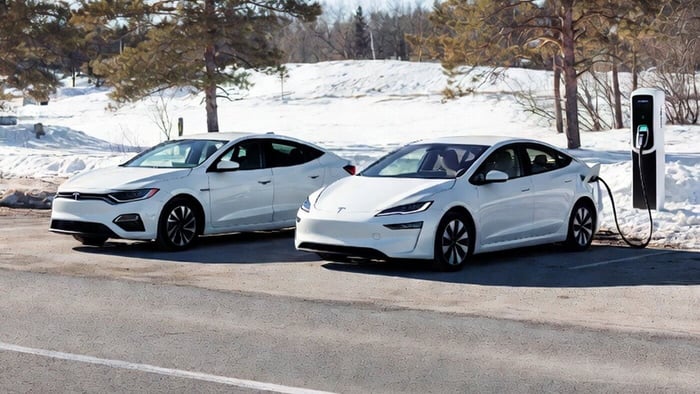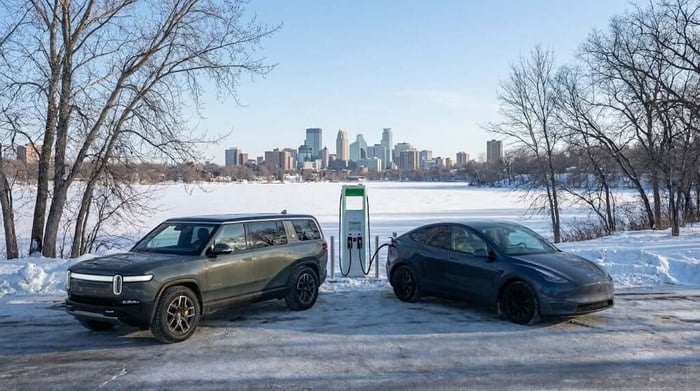
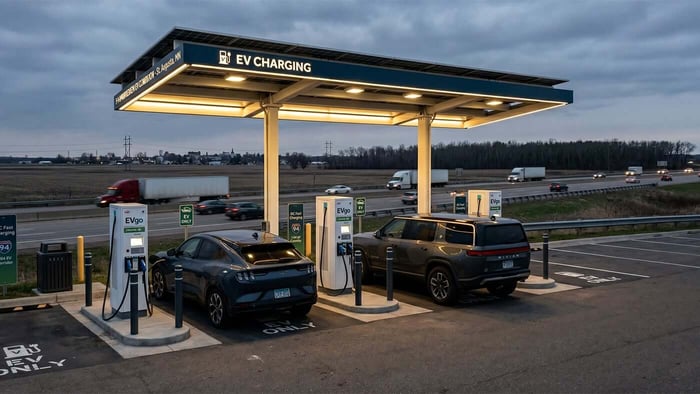

Picture this: you're an hour outside the Cities, your battery's at 20%, and the nearest charger might as well be in Wisconsin. For a lot of Minnesotans, that fear was a real barrier to going electric. So here's the honest answer: The numbers of EV charging stations in Minnesota have changed dramatically in recent years, and the network looks genuinely different than it did even two or three years ago. If range anxiety has been keeping you from considering an electric vehicle, it's worth taking a fresh look at the numbers.
Quick fact: When it comes to EV charging stations in Minnesota, 2026 data shows 1,173 public locations with 3,358 total charging ports spread across more than 200 cities statewide, according to the U.S. Department of Energy's Alternative Fuels Data Center. Of those ports, about 1,002 are DC fast chargers — the type that can add 100 miles of range in under 30 minutes.
That's a meaningful network for a state that not long ago had just a handful of fast chargers outside the metro. Here's what you need to know about where things stand with EV charging stations in Minnesota in 2026 — and what it means if you're thinking about buying an electric vehicle.
Table of Contents
- How Minnesota's EV Charging Network Expansion Got Here
- Public EV Chargers on Minnesota Highways: Where to Find Them
- EV Charging in Greater Minnesota: The Rural Picture
- Home Charging: The Option Most EV Owners Actually Rely On
- What Plug-and-Charge Means for Your Experience
- Buying a Used EV in Minnesota? What to Know About Charging Compatibility
- FAQs
How Minnesota's EV Charging Network Expansion Got Here
The growth didn't happen by accident. The big driver — literally and figuratively — has been the National Electric Vehicle Infrastructure (NEVI) Formula Program, a federal initiative that allocated roughly $68 million to Minnesota for EV charging infrastructure over federal fiscal years 2022 through 2026. MnDOT is responsible for administering those funds, with the focus on building DC fast charging (DCFC) stations along the state's designated Alternative Fuel Corridors (AFCs): Interstates 35, 94, and 90.
These aren't small projects. Every NEVI-funded station is required to have at least four 150 kW charging ports capable of operating simultaneously, be open 24/7 at no entry fee, and maintain 97% operational uptime for five years. That uptime requirement matters — one of the most common complaints among EV drivers has been pulling up to a broken charger.
As of April 2026, three NEVI-funded locations from rounds 1 and 2 are fully operational, with the remaining funded locations in various stages of pre-construction and construction. In December 2025, Minnesota's Alternative Fuel Corridors were officially certified as fully built out by the Federal Highway Administration — a milestone that unlocks the ability to use future NEVI funds on roads beyond the designated interstates. That's a big deal for Greater Minnesota.
Beyond NEVI, Xcel Energy has been part of the buildout, targeting hundreds of high-speed charging stations across Minnesota and Wisconsin. Private investment from networks like ChargePoint, Electrify America, and Tesla has also accelerated things significantly — 2025 was the biggest year on record nationally for privately funded DC fast charger deployment.
Public EV Chargers on Minnesota Highways: Where to Find Them
If you're planning a longer drive, the major corridors are increasingly well-covered. The I-94 corridor and I-35 corridor have both seen concentrated charger buildout, with fast charging options appearing at highway service areas, travel plazas, and convenience stores along the route.
Minneapolis leads the state with around 150 public charging locations. Saint Paul and Rochester are next, followed by a growing list of outstate cities including Duluth, Brainerd, St. Cloud, Alexandria, Fergus Falls, and Mankato. That coverage is meaningfully better than even a few years ago, when fast chargers outside the metro required careful pre-trip planning.
For real-time charger availability, here are the tools most EV drivers actually use:
- Tesla app — Even if you don't own a Tesla, the Tesla app is worth having. It shows all Supercharger locations in Minnesota, real-time stall availability, and pricing. Since Tesla opened its Supercharger network to non-Tesla vehicles, it's become a legitimate part of the public charging landscape for any NACS-compatible EV. CCS drivers can access Superchargers too with a Tesla-sold adapter. The network has a strong reputation for reliability and ease of use compared to many third-party networks.
- PlugShare — The crowdsourced Wikipedia of EV charging. Real driver check-ins tell you whether a station is working, busy, or blocked. Covers the widest range of locations, including smaller municipal and hotel chargers that don't appear in network-specific apps.
- ChargePoint app — Works well for planning routes and managing payments across the ChargePoint network. Good for trip-friendly filtering and pricing details.
- Electrify America — Best for locating DC fast chargers along highway corridors. Multi-stall sites near major retail, with stalls at 150 kW and some at 350 kW.
- A Better Routeplanner (ABRP) — Popular for calculating charging stops based on your specific vehicle, route elevation, and weather. Especially useful for longer Minnesota road trips.
- AFDC Station Locator (afdc.energy.gov) — The U.S. Department of Energy's no-app-required web tool. Pulls from the same authoritative data that powers most third-party apps.
A practical note: download the apps for the networks you use most before you need them — not in a frigid parking lot when you're already at 12%.
EV Charging in Greater Minnesota: The Rural Picture
This is where honesty matters. The Twin Cities metro and regional hubs like Rochester and Duluth are reasonably well-served. But EV charging in Greater Minnesota's rural areas is still uneven — improving, but a work in progress.
The MPCA (Minnesota Pollution Control Agency) has used Volkswagen settlement funds to add fast chargers along key rural corridors, targeting gaps that private investment alone wouldn't reach. And the recently certified AFC buildout means MnDOT can now direct future NEVI funding toward non-interstate routes — which should eventually extend the network into more of outstate Minnesota.
For rural EV drivers right now: trip planning matters more than it does in the metro. Apps like PlugShare will show you where gaps exist, and planning charging stops in advance (rather than hoping to find one en route) is the smart approach. If you're regularly driving remote routes, it's worth knowing your vehicle's range well before committing to an EV without a home charger backup plan.
One development that helps is NACS standardization. The NACS (North American Charging Standard) — originally developed by Tesla and now adopted by most major automakers for 2025 and newer vehicles — means those cars have native access to Tesla's 33 Supercharger stations in Minnesota (288 ports). That meaningfully expands the network for compatible vehicles, including in areas where other fast chargers are sparse.
Home Charging: The Option Most EV Owners Actually Rely On
Here's a fact that surprises people new to EV ownership: the vast majority of EV charging happens at home — not at highway fast chargers, not at shopping center Level 2 stations. At home, overnight, while you sleep. Public chargers are primarily for road trips and the occasional top-up, not daily charging.
There are three levels of home charging:
| Level | Voltage | Speed | Best For |
|---|---|---|---|
| Level 1 | 120V (standard outlet) | 3–5 miles/hour | Low daily mileage, no installation needed |
| Level 2 | 240V (dryer outlet) | 20–30 miles/hour | Most home EV charging — recommended for daily drivers |
| DC Fast Charge | 480V+ | 100+ miles in ~30 min | Public highway stations only — not a home option |
Getting a Level 2 charger installed in your Minnesota home involves two costs: the charging unit itself (typically $300–$1,000 depending on brand and features) and the installation. The most common Twin Cities setup — a garage-mounted charger with a 15–30 foot wire run — typically runs $1,400–$2,200 for labor and materials, according to local electrical contractors. Homes with older 100-amp panels (common in Minnesota homes built before 1990) may need a panel upgrade, which adds $3,000–$7,000.
The good news is that incentives help offset the cost:
- ✓Federal tax credit — The Alternative Fuel Vehicle Refueling Property Credit covers 30% of installation costs up to $1,000 for eligible home charger installations through June 30, 2026.
- ✓Utility rebates — Over 40 Minnesota utilities offer rebates averaging around $500 for residential Level 2 charger installation. Xcel Energy, Otter Tail Power, Minnesota Power, and dozens of electric cooperatives all have programs. Check your specific utility before you buy.
- ✓Off-peak charging rates — Most Minnesota utilities offer time-of-use rates for EV charging. Charging overnight typically costs roughly half the standard electricity rate — a significant long-term savings compared to public charging.
What Plug-and-Charge Means for Your Experience
If you've heard about "plug-and-charge" and wondered what it actually means in practice: it's a feature that lets compatible EVs and charging stations communicate automatically when you plug in — no app, no payment card, no fumbling with a touchscreen in January. You plug in, charging starts, and you're billed automatically to a payment method on file.
It sounds like a small thing, but it significantly improves the public charging experience. Card readers and touchscreens at outdoor chargers can malfunction over time — a real complaint among EV drivers. It also eliminates the need to manage multiple charging apps, which has been a real friction point. More newer stations and newer vehicles across Minnesota's EV charging network support plug-and-charge, and adoption is growing.
Buying a Used EV in Minnesota? What to Know About Charging Compatibility
If you're considering a used electric vehicle, connector compatibility is worth understanding before you buy. Most used EVs on the market today use one of two standards: CCS (Combined Charging System) or NACS (North American Charging Standard). Older Nissan Leafs used CHAdeMO — a standard being phased out, with limited support at new charging stations and few new vehicles using it.
For most used EVs you'll find today, CCS or NACS will cover the vast majority of public charging access in Minnesota. CCS vehicles access Electrify America, ChargePoint DC fast chargers, and NEVI-funded stations. NACS vehicles (Teslas and recent model-year EVs from other automakers) access Superchargers directly and can use adapters for CCS stations.
When evaluating a used EV, run a vehicle history report. Battery condition and charging history matter — a vehicle that's been regularly fast-charged at high rates over time may show more battery degradation than one that's been primarily home-charged. It's worth asking about and, when possible, having an independent inspection done.
The bottom line for Minnesota drivers considering an electric vehicle in 2026: the network of EV charging stations in Minnesota is significantly stronger than most people realize, home charging is simpler and cheaper than public charging for daily use, and the infrastructure buildout — while not complete everywhere — is moving in the right direction. It's a better time to go electric in Minnesota than it's ever been.
FAQs
How many public EV charging stations are in Minnesota?
As of May 2026, Minnesota has 1,173 public EV charging stations with 3,358 total charging ports, according to the U.S. Department of Energy's Alternative Fuels Data Center. That includes 1,002 DC fast charging ports and 2,292 Level 2 ports across more than 200 cities statewide. Minneapolis leads with about 150 stations, followed by Saint Paul and Rochester.
What is the NEVI program and how is it affecting Minnesota?
The National Electric Vehicle Infrastructure (NEVI) Formula Program is a federal initiative that allocated roughly $68 million to Minnesota for EV charging infrastructure through 2026. MnDOT administers the funds, which are being used to build DC fast charging stations along the state's Alternative Fuel Corridors — Interstates 35, 94, and 90. In December 2025, Minnesota's corridors were certified as fully built out, unlocking the ability to use future funds on other roads, including routes in Greater Minnesota.
What is the best app to find EV charging stations in Minnesota?
PlugShare is widely considered the most comprehensive app for finding EV chargers, with crowdsourced driver check-ins that reflect real-world station status. ChargePoint's app is useful for ChargePoint network stations and route planning. Electrify America's app is best for finding DC fast chargers along highway corridors. For web-based searches without an app, the U.S. Department of Energy's Alternative Fuels Station Locator at afdc.energy.gov covers the full network.
How much does it cost to install a home EV charger in Minnesota?
A Level 2 home EV charger installation in Minnesota typically costs between $1,400 and $2,200 for a standard garage installation, excluding the charger unit itself (which ranges from $300 to $1,000). Homes with older 100-amp electrical panels may need a panel upgrade, which adds $3,000–$7,000. Federal tax credits cover 30% of installation costs up to $1,000 through June 30, 2026, and many Minnesota utilities offer rebates averaging around $500.
Is EV charging available in rural Minnesota?
Rural EV charging coverage is improving but uneven. Key corridors along I-94, I-35, I-90, and between major cities like Duluth, Rochester, and St. Cloud are reasonably well-covered. More remote areas require advance trip planning. The MPCA has used Volkswagen settlement funds to add rural corridor chargers, and future NEVI rounds will be able to fund chargers off the main interstates now that Minnesota's Alternative Fuel Corridors have been certified as complete.
What is NACS and does it matter for buying a used EV?
NACS stands for North American Charging Standard — the connector type originally developed by Tesla and now adopted by most major automakers for 2025 and newer vehicles. NACS vehicles have native access to Tesla's 33 Supercharger stations in Minnesota (288 ports) as well as the growing public network. If you're buying a used EV with a CCS port, adapters are available for Supercharger access on most models. CHAdeMO, used on older Nissan Leafs, is being phased out and has limited support at new stations.