
The first hard frost in Minnesota has a way of showing up before you're ready for it. One week you're raking leaves in a t-shirt, and the next you're scraping ice off the windshield at 6 a.m. wondering when your wiper blades started smearing more than they wiped. Your car feels that shift just as much as you do. The vehicles that handle winter best are almost always the ones that got a proper once-over in October, not the ones patched together in a parking lot during a January cold snap. That's the idea behind a fall car maintenance checklist: a short list of checks that take an afternoon now and save you a tow truck call later.
Here's the short version, if you only have a minute: before the first freeze, check your battery's cold cranking amps, tire tread and pressure, oil and coolant levels, wiper blades and washer fluid, and your belts and hoses — then pack a small emergency kit for the trunk.
Below, we'll walk through each of those in more detail, plus a few things that are easy to overlook until they fail at the worst possible moment.
Table of Contents
- Fall Car Maintenance Checklist Minnesota Drivers Should Start With: The Battery
- Check Your Tires Before the First Snowfall
- Prepare Your Car for Winter With an Oil and Fluids Check
- How to Winterize Your Car in Minnesota: Belts, Hoses, and Wipers
- Rust Prevention: Dealing With Road Salt Before It Starts
- Build a Winter Emergency Kit for the Trunk
- Your Fall Car Maintenance Checklist, One Last Time
- FAQs
Fall Car Maintenance Checklist Minnesota Drivers Should Start With: The Battery
Cold weather is brutal on batteries, and most people don't think about theirs until it won't turn over. A battery that's already weak in September often has just enough life to limp through mild fall mornings — right up until temperatures drop into the teens and it doesn't have the reserve power to start the engine at all.
The number to know here is cold cranking amps (CCA), the rating that tells you how much power your battery can deliver in cold conditions. It's printed right on the battery case. Most auto parts stores and repair shops will run a load test for free in a few minutes, and it's worth doing now rather than finding out the hard way in a grocery store parking lot. If your battery is three years or older, or the test comes back weak, replacing it in October is a lot more pleasant than replacing it during a windchill warning.
While you're under the hood, take a look at the terminals. A little white or greenish crust around the posts is corrosion, and it can interfere with the connection even if the battery itself is healthy. A wire brush and some baking soda paste will usually clear it right up.
Check Your Tires Before the First Snowfall
Tire pressure drops as temperatures fall — roughly one to two PSI for every ten-degree drop — which means tires that looked fine in August can be noticeably underinflated by the time the leaves are off the trees. Underinflated tires wear unevenly, grip worse in wet and slick conditions, and quietly hurt your gas mileage the whole time.
Check your pressure against the number on the sticker inside your driver's door jamb, not the number printed on the tire itself — those are two different things, and the door sticker is the one that matters for your vehicle. Do it when the tires are cold, ideally first thing in the morning before you've driven anywhere.
Tread depth matters just as much as pressure once snow and slush enter the picture. The classic penny test still works: insert a penny into the tread groove with Lincoln's head upside down, and if you can see all of his head, it's time to start shopping for new tires. If you're regularly driving on snow-covered roads, dedicated winter tires will outperform all-season tires by a wide margin once temperatures consistently drop below 45°F, since the rubber compound in all-seasons stiffens up and loses grip in the cold.
Prepare Your Car for Winter With an Oil and Fluids Check
Your owner's manual likely specifies a winter-grade oil, usually a lower first number in the viscosity rating like 0W-20 instead of 5W-30. Winter-grade oil flows more easily when it's cold, which means your engine gets proper lubrication faster on those frosty morning starts instead of running dry for those first critical seconds. If you're not sure which grade your vehicle calls for, the manual will have it, or a quick call to your regular shop will settle it in under a minute.
Antifreeze (coolant) is the other fluid that deserves attention before winter. It's a mix of water and glycol that keeps your engine from freezing solid in extreme cold and from overheating in summer — most vehicles need a 50/50 mix to protect down to roughly -34°F, which covers the vast majority of Minnesota winters. A shop can test the mixture's freeze protection in a few minutes with a simple tool, and it's worth doing if you can't remember the last time it was checked.
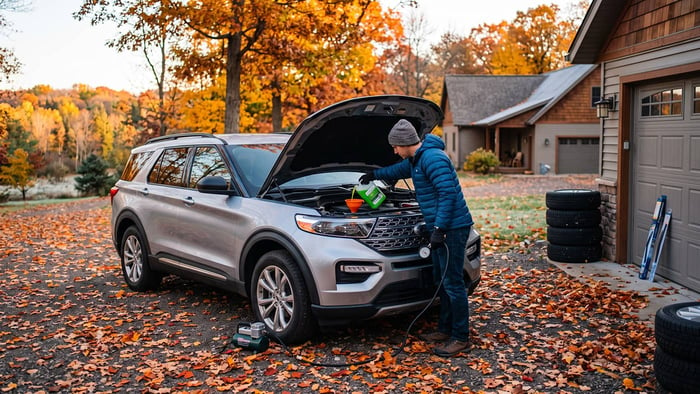
Don't skip washer fluid, either. Summer-blend washer fluid is mostly water and will freeze solid in the reservoir the first hard cold snap, cracking the lines in the process. Switch to a winter-rated fluid with a washer fluid freeze rating of at least -20°F before temperatures dip, and keep an extra jug in the trunk — you'll go through it fast once road salt starts coating your windshield.
How to Winterize Your Car in Minnesota: Belts, Hoses, and Wipers
A lot of winter breakdowns trace back to a part that was already cracked or worn before the cold weather made it fail completely. Rubber belts and hoses get stiff and brittle as temperatures drop, and a hose that was seeping slightly in August can split open in December. A quick visual check — looking for cracking, fraying, or soft spots when you squeeze a hose — takes two minutes and can catch a problem before it strands you.
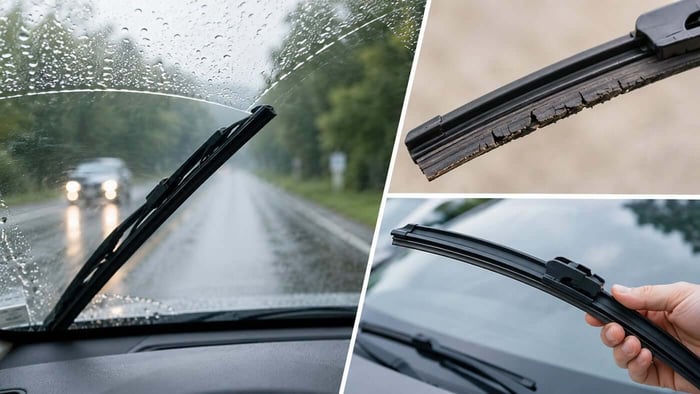
Wiper blade replacement is an easy one to put off, but a set of streaky, torn blades becomes a real visibility problem the moment slush starts flying off the car in front of you. Most blades need replacing every six to twelve months regardless of how they look, since the rubber degrades even when it's not in heavy use. This is also a good time to check that your washer fluid nozzles aren't clogged, since a strong spray matters more once road grime picks up for the season.
Rust Prevention: Dealing With Road Salt Before It Starts
Road salt corrosion does more damage to Minnesota vehicles over time than almost anything else on this list, and prevention is far cheaper than repair. Salt accelerates rust on the undercarriage, brake lines, and exhaust system, especially on older vehicles or ones that see a lot of highway driving through winter.
The single best habit you can build now is running your car through a wash with an undercarriage rinse every couple of weeks once salt trucks are out, rather than waiting until spring for one big cleanup. If you park outside, an occasional check underneath for surface rust starting to form can help you catch it early enough that a rust inhibitor treatment actually does some good. It's a small, unglamorous habit, but it's the difference between a car that still looks solid at 150,000 miles and one that's visibly rotting from underneath at 80,000.
Build a Winter Emergency Kit for the Trunk
Even a well-maintained car can end up stuck on the shoulder, and Minnesota winters aren't forgiving if you're unprepared when it happens. A basic winter emergency kit doesn't need to be elaborate:
| Item | Why It Matters |
|---|---|
| ✓ Warm blanket | Keeps you warm if you're stuck waiting for help |
| ✓ Flashlight | Visibility for roadside repairs or signaling |
| ✓ Jumper cables or jump starter | Handles the most common cold-weather breakdown |
| ✓ Small shovel | Digs tires out of snow or a ditch |
| ✓ Sand or cat litter | Adds traction under a stuck tire |
| ✓ Non-perishable snacks | Keeps energy up during a long wait |
None of this needs to cost much or take up much trunk space, but the first time you're waiting for a tow truck on the side of the highway in December, you'll be glad it's back there.
Your Fall Car Maintenance Checklist, One Last Time
Getting through a Minnesota winter without a surprise breakdown usually comes down to a handful of boring, unglamorous checks — not luck. Work through this fall car maintenance checklist now, while it's still convenient to sit in a warm garage instead of a cold driveway, and you'll spend a lot less time worrying about your car once the snow actually starts flying. A little time this month buys you a lot of peace of mind come January.
FAQs
How much does a full fall car maintenance checkup typically cost?
It varies by shop and vehicle, but a basic inspection covering the battery, fluids, belts, and tires is often modest compared to the cost of a winter breakdown or tow. Many shops offer a fall or winter-prep package that bundles these checks together, so it's worth asking what's included before you book anything piecemeal.
When should I switch to winter tires in Minnesota?
A good rule of thumb is once overnight temperatures start consistently dropping below 45°F, which in Minnesota is usually sometime in October or early November. All-season tires lose flexibility and grip in cold temperatures even before snow shows up, so the timing is more about temperature than about whether it's actually snowing yet.
How do I know if my car battery needs to be replaced?
Slow cranking when starting the engine, dashboard lights that dim when you start the car, or a battery that's three years or older are all signs worth getting checked. A free load test at most auto parts stores or repair shops will tell you definitively whether it's still holding a proper charge.
Is it necessary to change to winter-grade oil, or is that overkill?
If your owner's manual specifies a seasonal viscosity change, it's worth following — thicker oil flows poorly in cold starts and can leave your engine under-lubricated for those first critical seconds. If your manual specifies a single year-round viscosity, most modern engines are fine without a seasonal switch, so check your manual rather than guessing.
How often should road salt be washed off my car in winter?
Roughly every two weeks during active salting season is a reasonable target, with extra attention to the undercarriage. If there's a stretch of warmer weather and no snow in the forecast, that's a good window to get a thorough wash in before the next round of salt trucks go out.
What's the most commonly overlooked item on a fall maintenance checklist?
Wiper blades and washer fluid freeze rating tend to get skipped the most, mostly because they don't seem urgent until the first messy commute of the season. They're also two of the cheapest and fastest fixes on this entire list, which makes them an easy win.